
The Long Trail of Vindictiveness: Frederick Azzopardi and Minister Owen Bonnici
— Minister Owen Bonnici was fully aware that his previous comments to those four witnesses (a, b) had exposed his discrimination against me based on my alleged association with Daphne. Knowing his reputation and career were at stake, he was left with no option but to hastily issue the long-stalled leave approval via a backdated letter — A DESPERATE COVER-UP to make it appear as though his decision was entirely unrelated to her assassination.
— What is most disturbing in Malta is not that public officials go to such great lengths to avenge themselves against an ordinary citizen they so thoroughly detest; it is the deafening silence from a compromised main opposition and NGOs. They seem to actively enjoy it, leaving little doubt that they would have done the exact same had they been in government instead.

 Utterly corrupt, ruthlessly vindictive: Frederick Azzopardi
 Equally corrupt, ruthlessly vindictive: Minister Owen Bonnici
Frederick Azzopardi, the former Chief Executive of Infrastructure Malta, built his reputation on a controversial strategy: widening roads at the expense of Malta's rapidly vanishing virgin land. His crowning — and perhaps most divisive — achievement, the Central Link Project, further sacrificed precious farmland under the questionable logic that more asphalt is the ultimate cure for traffic congestion.
To understand the man behind the machinery, we must look back at his "humble" beginnings. Azzopardi graduated as a Mechanical Engineer in 1996. Shortly thereafter, he secured a comfortable government position — a transition so seamless it raises questions about whether a formal interview process even took place, or if the path was cleared for him from the start.
From Council to Corporation: The Rise of Frederick Azzopardi
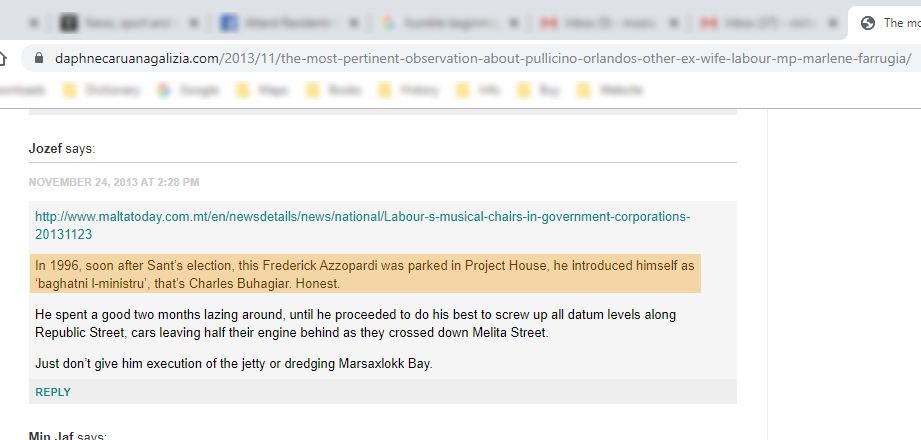 Frederick Azzopardi’s political trajectory began at the local level, serving as an MLP (Malta Labour Party) councillor in his hometown of Rabat in 2000. By 2006, he had transitioned to the Mdina Local Council, continuing his steady climb within the party’s grassroots.
His role during national elections was equally active. Reports from the 2013 election (and those preceding it) suggest he served as a party representative at the Naxxar counting hall. He was potentially among the more vocal delegates; the now-defunct news portal
The "Meritocracy" of 2013
Following Labour's 2013 landslide victory — a campaign built on the hollow pillar of meritocracy — Azzopardi was swiftly appointed CEO of the Water Services Corporation (WSC). In reality, his primary "merit" appeared to be his unwavering party allegiance. Prior to this high-profile appointment, his professional background was relatively low-key, consisting of technical work at Project House involving the inspection and certification of lifts.
The Fast Track: From Lifts to Electrogas
Azzopardi’s ascent was meteoric. By January 2014, less than ten months after the election, he was promoted to CEO of Enemalta.
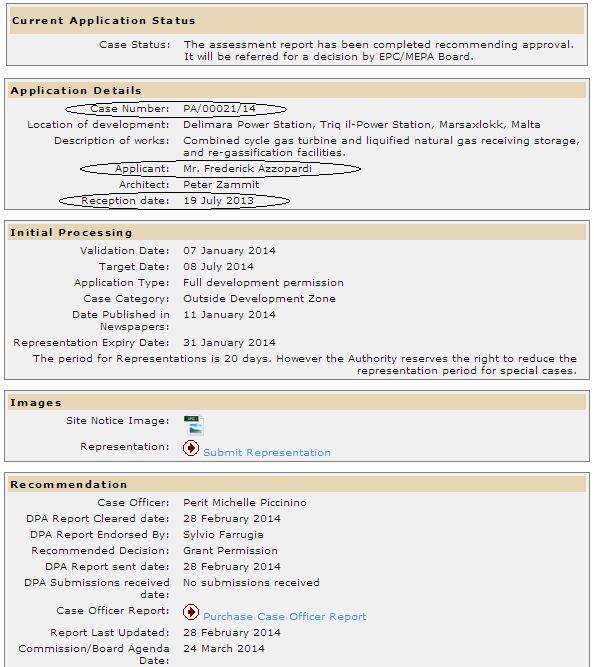
However, his involvement in the energy sector began well before he officially took the helm at Enemalta. On July 19, 2013, while still heading the WSC, he was listed as the official 'Applicant' for the controversial new gas plant — the Electrogas project — at the Delimara Power Station (PA/00021/14). The following extract, retrieved from the MEPA website in 2014, details that application:
A Convenient Revision of History?
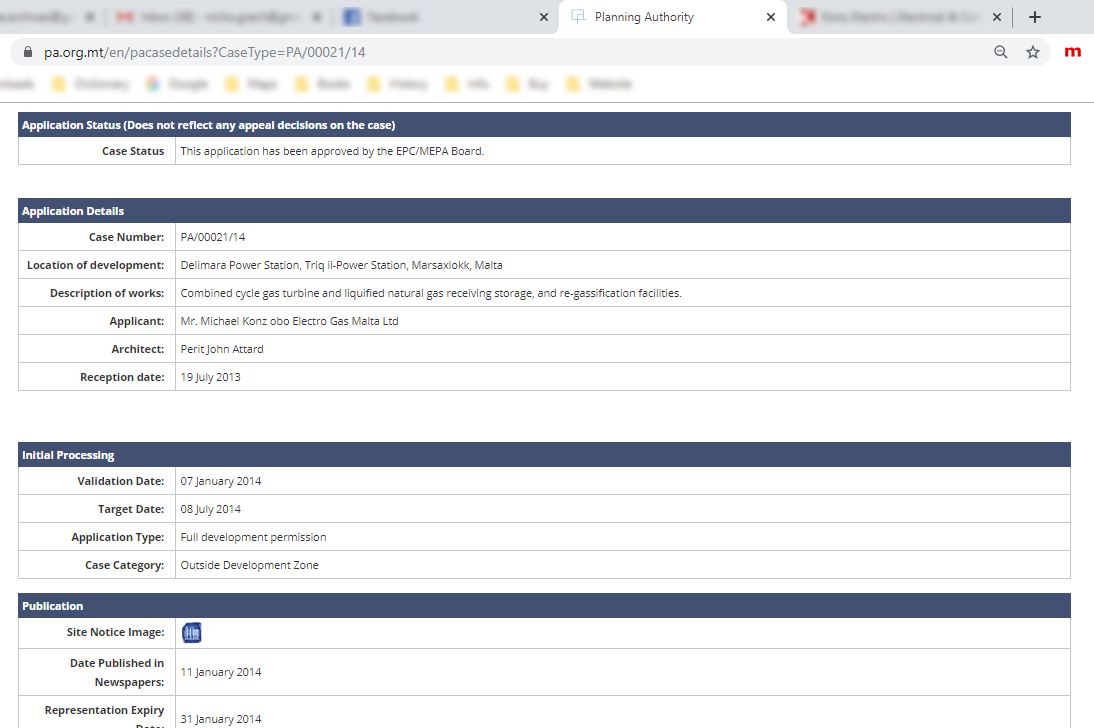
If you search for that same application (PA/00021/14) on the Planning Authority (PA) server today, you will notice some striking discrepancies. While the submission date remains July 19, 2013, and the technical details are identical, the names on the document have changed.
Today, the applicant is listed as Mr. Michael Konz on behalf of Electrogas Malta Ltd, rather than Frederick Azzopardi. Similarly, the architect is now listed as Perit John Attard. This replaces the original architect, Peter Zammit, whose firm was reportedly paid €189,504.28 via direct order for the plans of the new gas terminal at Delimara.
Despite these "updates" to the digital file, the original record I retrieved in 2014 tells a different story:
Scrubbing the Record
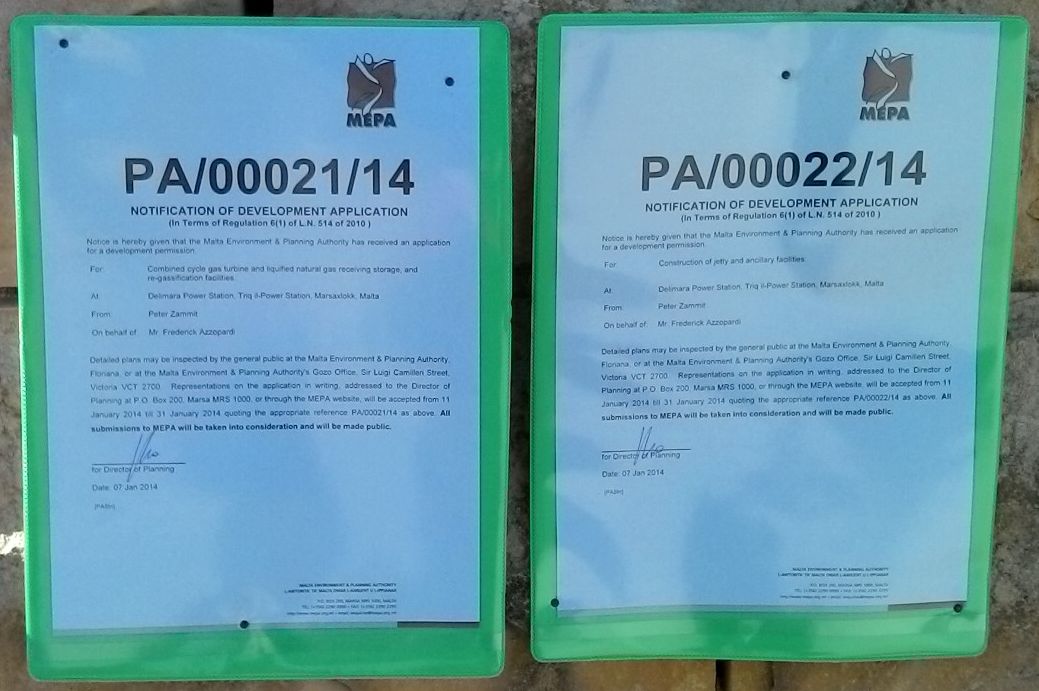
A similar pattern of "revisionism" appears in application PA/00022/14, which concerned the construction of the jetty and ancillary facilities. It appears the names were simply swapped to scrub the record and eliminate any immediate suspicion of wrongdoing, corruption, or premeditation.
The choice of the new applicant is particularly bizarre. If you search for "Michael Konz" in relation to Electrogas, you will find an incredible lack of information. One would expect the face of such a massive, multi-million-euro project to be a renowned entrepreneur or a high-profile industry leader, yet "Mr. Konz" remains a digital ghost.
The Proof in the Field
For those who might suspect that the digital record showing Frederick Azzopardi’s name is a fabrication, the evidence is etched in physical reality. Below is a photograph of the original application affixed to the Delimara Power Station boundary wall in 2013/2014. It clearly lists Frederick Azzopardi as the applicant for both projects — as extracted from the PA server.
The Power Station: A Premeditated Masterpiece?
Given the long-standing allegations of corruption surrounding the Electrogas project — involving businessman Yorgen Fenech (an outsider and suspected party financier) and former Minister Konrad Mizzi (a newcomer to the political stage)—one cannot help but wonder about the role of a party loyalist like Frederick Azzopardi. Having put his name down as the original applicant, did he too have a "share" in the venture?
Of course, one might sarcastically argue he did it solely for the love of his country, with no personal interest in mind. Yet, within a year, he began being referred to as the Executive Chairman of Enemalta. This was likely not a move to save the corporation the expense of a chairman; by combining the roles of CEO and Chairman, he effectively consolidated power and, presumably, paychecks. It is quite possible that his total remuneration package ended up dwarfing the "official" salaries of the Prime Minister and Minister Mizzi themselves.
The Team Behind the Deal
Given Konrad Mizzi’s heavy involvement in the deals and the subsequent exposure of all his mysterious offshore companies, it is impossible not to wonder about Frederick Azzopardi. Could someone as greedy as Azzopardi — who likely played a major role in these premeditated negotiations — really have walked away without fattening his own pockets? Was the fact that he ended up holding the combined roles of CEO and Chairman, pocketing two salaries simultaneously, his way of collecting his reward?
If we assume Konrad Mizzi was the mastermind who brokered this "done deal" before the 2013 election, we must also consider the logistics. Even the most ambitious politician might lack the technical expertise to hide complex financial transactions in the digital age. This is likely where the services of Brian Tonna and Nexia BT became essential.
This connection naturally draws in Keith Schembri, who, alongside Mizzi, utilized the same advisory firm to set up Panama companies just five days after the 2013 election. If the power station project was indeed a "team effort" and the primary goal of the party, it is difficult to imagine that the "Captain" himself — the Prime Minister — and the original applicant, Frederick Azzopardi, were not part of the inner circle.
The Money Trail and the Ultimate Sacrifice
The 2017 allegations regarding kickbacks from the LNG tanker into accounts held by Hearville and Tillgate provide a possible motive for the existence of the infamous Egrant and 17 Black, not to mention the role of Pilatus Bank.
It is a chilling thought: Were Mizzi and Schembri kept in office at the time because they were "indebted" to the higher-ups? Were they the designated sacrificial lambs, allowing their names to be used to shield more prominent figures while acting as conduits for the money? Most tragically, this leads to the suspicion that Daphne Caruana Galizia had to be eliminated. As an investigative journalist, she was the primary obstacle. From the perspective of those involved, the cost of an assassination may have been seen as a necessary "business expense" to protect the massive sums of money at stake.
The New Guard at Enemalta
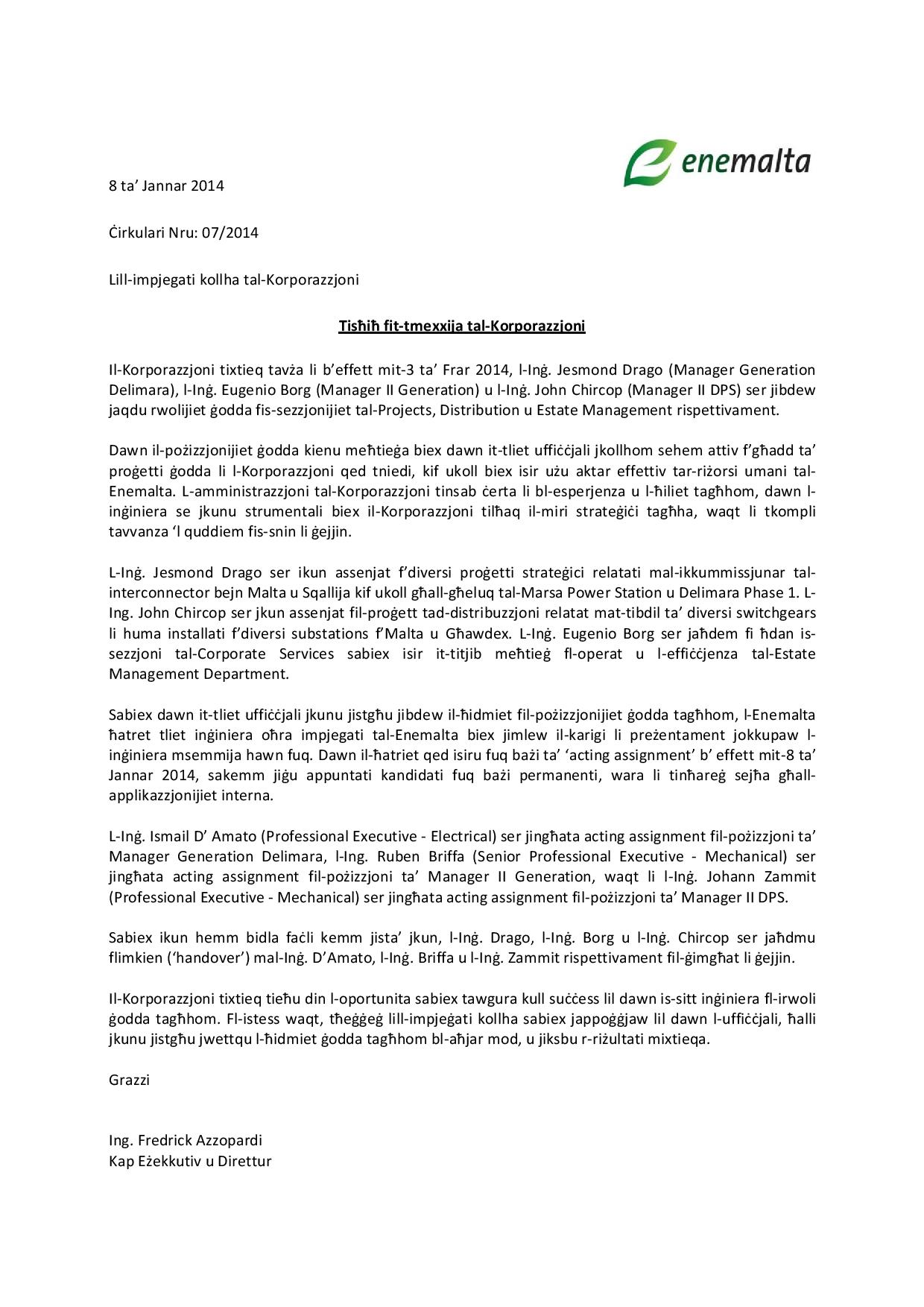
Returning to January 2014, Azzopardi — having been so "meritocratically" appointed — wasted no time in establishing his own hierarchy. In his first week as CEO, he followed the party's example by appointing three loyalists as acting managers.
The following is the internal statement he issued to Enemalta employees. Note that he already lists himself as both Chief Executive and Director, arguably securing multiple streams of income from the outset:
2014: The Purge at Delimara
It became clear almost immediately that Frederick Azzopardi’s tenure at Enemalta would begin with a wave of vindictive transfers. By the end of his first week in January 2014, the three established managers at the Delimara Power Station (DPS) were notified by the then-Executive Head of Generation, Ing. Peter Grima, that they were to be replaced. To keep the maneuver quiet, the existing managers were told they would be transferred to other sections by the end of the month.
The secret didn’t last long. The following day, the newly appointed ‘Acting’ managers failed to report to their previous sections and instead began assuming managerial control — issuing orders and making executive decisions. These new figures were Ing. Ismail D’Amato, Ing. Ruben Briffa, and Johann Zammit (who used the title "Ing." despite questions surrounding his engineering warrant at the time). They were placed into the roles of Acting Manager, Acting Assistant Manager of Operations, and Acting Assistant Manager of Maintenance, respectively.
Premeditated "Meritocracy"
Months later, a call for applications was issued for these posts. To those on the inside, it was a transparent sham. The "Acting" managers were simply confirmed in their roles; the process was so clearly rigged that few others even bothered to apply.
The subsequent career paths of these individuals are telling. By November 2017, rumors suggested D’Amato was being groomed for the CEO position, only for him to be ousted following a rumored clash with Azzopardi, before resurfacing months later. Briffa was moved to a comfortable managerial role at Enemed, where he reportedly spent office hours writing international op-eds for the pro-government newspaper L-Orizzont. Meanwhile, Zammit was officially installed as the DPS manager.
A Culture of Fear and Frustration
The removal of dedicated, experienced managers in such a humiliating fashion sent shockwaves through both the Delimara and Marsa Power Stations. It wasn’t just a topic of gossip; it was a source of genuine fear. Seasoned engineers who had spent years earning their stripes felt humiliated to be surpassed by "loyalists" in their 30s with minimal management experience.
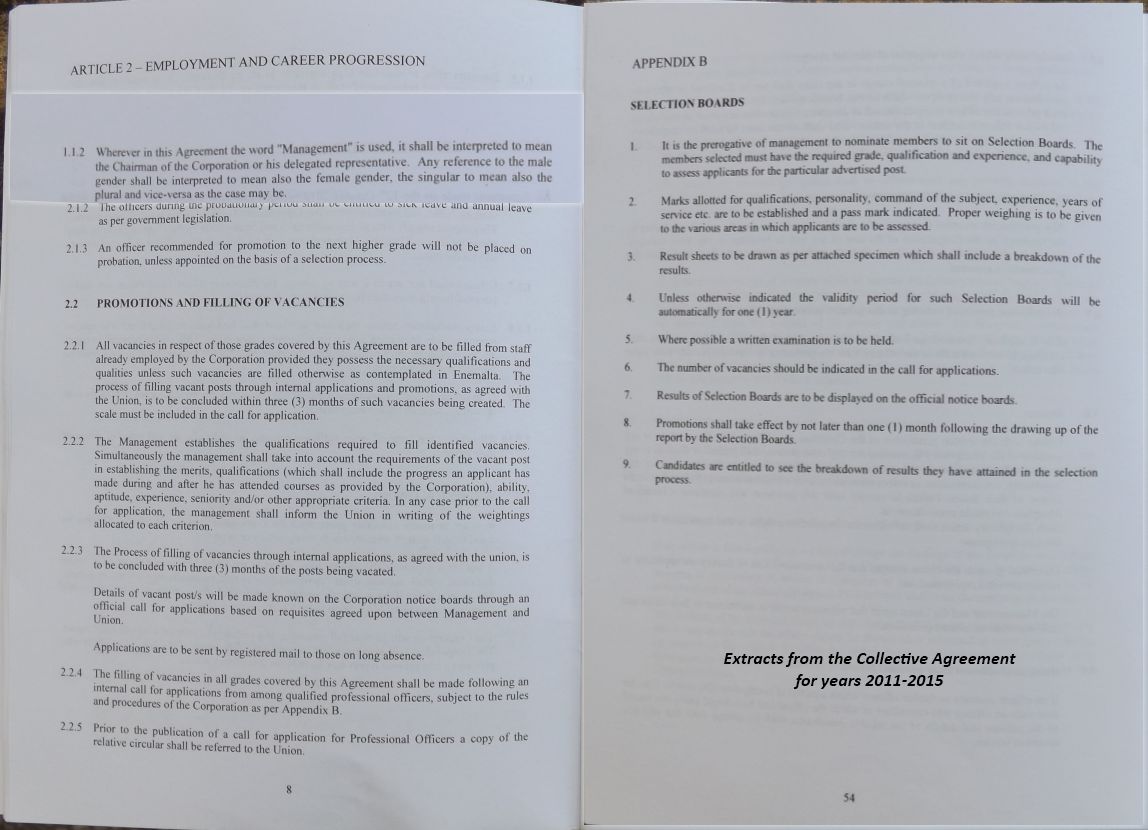 The Enemalta Professional Officers Union (EPOU) eventually issued a statement condemning these promotions. These appointments bypassed the standard procedures laid out in the Collective Agreement (2011-2015), which required formal calls for applications and a transparent selection process. Instead, experience was traded for allegiance. By February 14, 2014, the "old managers" had been unceremoniously dumped at the Marsa station, leaving the party’s hand-picked lackeys in control of Malta's energy production.
Strategic Placements and Bypassed Warrants
All three individuals had moved from the Marsa Power Station (MPS) to the Delimara Power Station (DPS) shortly before their promotions. Under the previous PN administration, they seemingly benefited from continued preferential treatment — allegedly from Ing. Peter Grima — allowing them to secure their positions at DPS while their colleagues remained at Marsa, their futures uncertain as the station neared its long-planned closure.
Ismail D’Amato was deployed to DPS around 2012 and was quickly assigned to the BWSC plant during its construction and commissioning. Johann Zammit arrived at DPS in July 2013, following the PL (ex-MLP) victory. Remarkably, he was promoted to a managerial role just six months later. It is highly improbable that he gained sufficient experience across Delimara's various plants in such a short window.
Furthermore, Zammit’s promotion to Acting Assistant Manager in 2014 appears to have occurred before he held a formal Engineering Warrant, as his warrant number (1415) was issued later. This stands in stark contrast to my own experience in 2000, where I was told a warrant was a mandatory prerequisite even for shift-based engineering work — an excuse that delayed my deployment for over a year.
The Rise of Ruben Briffa
Ruben Briffa, who moved to DPS around 2008/9, shared more than just a political lean with the new administration. A native of Għaxaq, he was in the same mechanical engineering course as Frederick Azzopardi. After the 2013 election, Briffa reportedly began maneuvering to secure his post at the BWSC plant, knowing that the party intended to phase out the older Phase 2B plant. When the old management resisted his demands, he allegedly applied ministerial pressure to force his way onto the BWSC team.
Briffa was known for his attempts to maximize night shifts — often seen as a way to minimize workload — and was frequently heard ridiculing the old management in front of operators. Colleagues from his time at Marsa recall a lack of professional discipline; he would occasionally report for Sunday shifts visibly exhausted or even intoxicated after nights out.
A Culture of Excess and Exceptions
The case of Johann Zammit highlights a recurring theme of exceptionalism. Under the PN administration and Ing. Grima, Zammit was purportedly the only engineer ever permitted to work shifts — including Sundays and public holidays at double or triple pay — from the very start of his probation period.
Despite having graduated only months prior and possessing no significant experience (and no warrant at the time), he was allowed to "fatten his pockets" at Enemalta's expense while still in training. This was an unprecedented privilege, especially considering that other engineers were forced to wait until they were fully warranted and seasoned before receiving such lucrative shift opportunities.
From Informants to Managers
During the 2012/2013 commissioning of the BWSC plant, it was widely suspected that at least one of these three individuals was leaking sensitive information to party media. They reportedly documented every technical fault — most notably leaking photos of damaged steam turbine blades — to provide political ammunition against the administration of the time.
In the world of "meritocracy," this type of internal sabotage was not punished; it was rewarded. Those who took delight in ridiculing Enemalta’s infrastructure were suddenly handed the keys to its management. It is a staggering irony: the very individuals who worked to undermine the corporation’s reputation were the ones selected to lead it.
The Systematic Purge of Experience
The three managers forced out by Frederick Azzopardi — Drago, Borg, and Chircop — represented the backbone of the Delimara Power Station. In 2014, aged 50, 54, and 48 respectively, they possessed a wealth of knowledge that spanned from the station’s inception. Unlike their successors, they had earned their roles through formal calls for application and rigorous selection processes as stipulated by the Collective Agreement.
These were professionals who lived for the job — often returning to the plant in the dead of night or on Sundays to handle turbine trips. They were the reference points for every engineer on site. Yet, despite the "beautiful wording" in Azzopardi’s dismissal letter, they were unceremoniously dumped. They were transferred to the Marsa Power Station — not to work, but to be forgotten. One manager in particular was given no duties at all, a calculated act of psychological warfare intended to break his morale. The human cost of this purge was high:
- One eventually found work at the Electrogas plant.
- Another tragically passed away in 2017 from heart complications.
- The third, whom I have encountered at Mount Carmel Hospital, appears to have been sidelined into meaningless, non-existent projects.
A Petty Vendetta
The purge was so thorough that it even extended to the managers' secretaries. In an act that strains belief, both secretaries were transferred to Marsa by February 2014. The motive behind this was reportedly as petty as it was professional. Those who knew Ruben Briffa well allege that the transfer of one secretary was a personal act of revenge for her refusing to date him years earlier — a claim I personally confirmed with the secretary herself after I was also transferred to Marsa weeks later.
The Fall of a Disciplinarian: How Ing. P. Grima Fell from Grace at Enemalta
Eventually, Ing. P. Grima got a taste of Frederick’s medicine. In his heyday, Grima used to strike fear into everyone; simply receiving a phone call from him was terrifying due to his severe discipline. (We had even associated the Nokia 'Toreador' ringtone with his number). Yet, under Frederick’s leadership at Enemalta, he became a complete lackey. He seemingly betrayed his principles and former colleagues just to save his post and cater to the vindictive desires of the newly appointed management. Ultimately, they found an excuse to sack him anyway, dumping him out of Enemalta despite his vast experience, and paving the way for the company to transform into a political party club.
To tell the whole story, however, Grima didn't apply his famous discipline to everyone. The total blackout on Good Friday, April 2, 2010, immediately comes to mind. I happened to be off duty at home, watching the procession on TV, when the power went out at around 7:00 PM.
The Good Friday Blackout: A Tale of Incompetence, Nepotism, and Covered Tracks
At the time, operators were refusing to take telephone calls due to an industrial dispute between the GWU and Enemalta (under the PN administration, the GWU practically ran the place). That evening, the Delimara Power Station (DPS) operations engineer on duty was indulging in his usual habit: staying locked in his office to attend to family matters — printing his children’s schoolwork, browsing the internet, trimming his beard, and showering. He didn't bother to visit the control room even once to instruct operators on when to start the gas turbine to meet the evening peak demand.
By the time the operators finally alerted him — ironically breaking their own GWU directive just to save his skin — it was way too late. This triggered a domino effect, tripping the generators at DPS first, followed minutes later by Marsa Power Station (MPS). Because this engineer was so unfamiliar with the control room — despite his title — it never even occurred to him that he could have shed feeders to prevent a total national shutdown, or at least kept MPS online.
The following day, I was on leave by the sea in Comino with some colleagues from the maintenance section. Out of curiosity, I called the office, and the engineer himself answered, desperately trying to figure out how to plot the system trends and charts. During the subsequent Enemalta investigation, this engineer reportedly hired Dr. Franco Debono and tried to blame everyone but himself — including his subordinates and the MPS engineer, who had actually managed to keep his plant running for a few minutes by shedding load.
Ing. Peter Grima (who was likely still Chief Technical Officer in 2010) was fully aware of these facts, including the engineer's notorious habit of hiding in his office, since Grima himself had previously served as Assistant Manager and Manager at DPS. Yet, during the second investigation, Grima suspiciously chose to cover for him. The engineer escaped without a single charge, warning, fine, transfer, or dismissal. Instead, Grima allegedly concocted the ridiculous excuse that if Enemalta blamed the engineer, the company would be held liable and sued for consumer damages. If Grima truly cared that much about Enemalta's liabilities, he would have used that excuse from the very beginning.
The Toxic Personnel Culture of Enemalta
This engineer was by no means an isolated case. Many others treated their roles at Enemalta as a part-time gig — a way to pocket an extra salary while focusing on their real priorities. Some gave private lessons, while others ran their own private companies, spending their paid working hours at Enemalta doing research and admin work for their personal businesses.
Meanwhile, people like me were left to carry the burden and clean up their leftovers. I found myself doing almost all the assessments for subordinates to determine if they were fit to move to "more privileged" sections (such as promoting plant operators to senior operators after a number of years).
In some cases, I even had to do the work of my subordinates because they constantly weaponized excuses. They would claim a particular task wasn’t in their job description and that it was the "maintenance section's duty." They would refuse to work until a toilet flushing system or a shower mixer was fixed. They would halt operations demanding raincoats, safety shoes, gloves, or masks — only to never actually wear them. (And if you dared order them to put on their safety gear, you'd waste another half hour arguing about it). Other times, you simply couldn’t find anyone because the upcoming shift had already showered and refused to get their hands dirty before clocking out.
From day one in a corporation like this, you learn a hard truth: the biggest headache isn't the machinery. The plant can always be fixed, one way or another. The real nightmare is the personnel — the people you think you have available to do a job, only to find you have no one.
To top it all off, there was a specific disease native to Enemalta: "football-itis." Employees would regularly report sick, perhaps suffering from some mysterious "radioactive radiation" caught while blatantly copying and pasting the plant's hourly readings.
Of course, there were exceptions. There were many dedicated, highly talented individuals at Enemalta from whom I learned an immense amount — far more than I ever learned from any colleague of my own rank, any textbook, or any university course.
The Roster Scam: How Enemalta’s New Managers Closed the Loophole They Used to Profit From
Returning to the three individuals Frederick promoted to serve as his puppets, they began issuing directives on what to do and what not to do while still in their supposed short handover period. As previously mentioned, this occurred before their official start date on February 3, 2014.
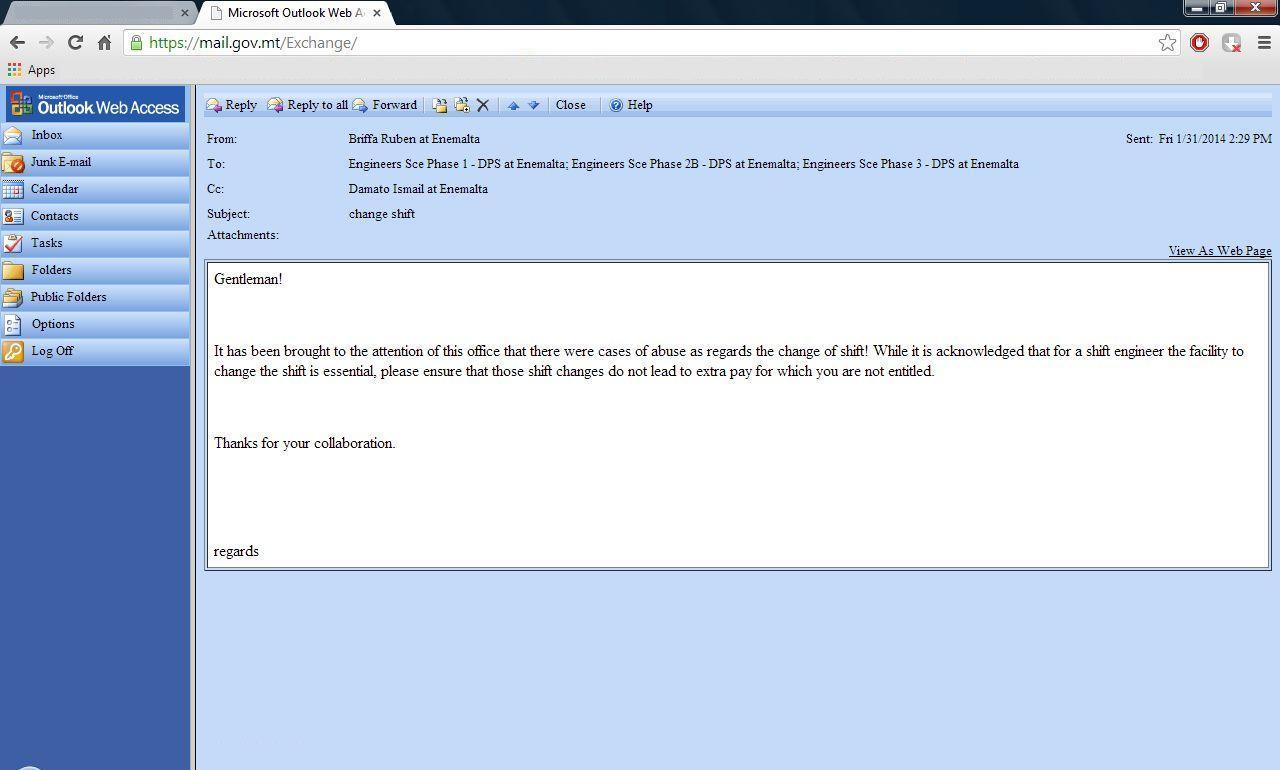
One such directive came from Briffa via an email sent on January 31, 2014 (as seen in the screenshot above). In the email, which he also forwarded to D'Amato, Briffa acted as though he had suddenly discovered an abuse regarding shift changes used to claim "extra pay to which you are not entitled." He played the innocent virgin, despite the fact that both he and D'Amato had been active participants in this very scam during their heydays as operations engineers at MPS, and possibly later at DPS.
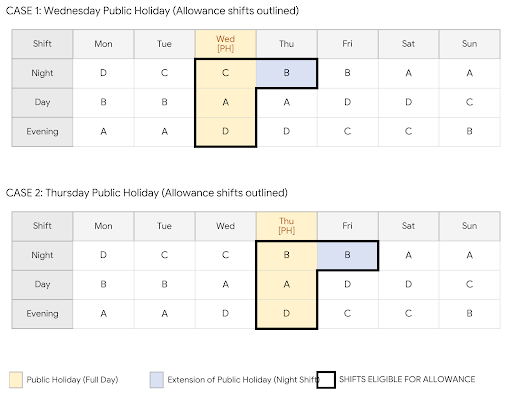 In Case 1, the natural rotation naturally qualified all four shifts for the public holiday allowance. In Case 2, C would normally have been ineligible; however, by executing a shift swap with B on Friday, C manipulated the roster to artificially gain eligibility for the allowance.
The scam involved a glitch in the operations engineers' roster. Originally discovered by the staff at MPS, the trick eventually made its way to DPS, though not everyone — including myself — was aware of it. If an engineer happened to be off duty on a public holiday, they would normally lose out on triple pay. To circumvent this, they would arrange a fraudulent shift change to look as though they had worked that day, pocketing an extra €100 or more in the process.
Briffa was not referring to the modest €2 or €3 night allowance. That was a minor benefit I sometimes lost when swapping shifts with colleagues who preferred the night shift. They wanted the nights because the lower workload allowed them to sleep or focus on their private businesses, ensuring they were fresh for their side hustles the next morning.
A few days after the email was sent, I crossed paths with Briffa in the control room. He told me to be cautious, claiming he had already alerted the payroll section to ensure this shift-change abuse was blocked in the future.
Out of curiosity, I later spoke about the matter with an MPS engineer who had been deployed to DPS operations a while back. He expressed deep frustration. He was bitter not only because Briffa and D'Amato — who were once his equals in rank — had been preferentially and "meritocratically" promoted to managers with higher salaries, but also because his own take-home pay was now reduced.
Now that Briffa and D'Amato could no longer personally enjoy that fraudulent extra pay, they vilely sought to deny it to everyone else. The engineer remarked that he might as well have stayed at the Marsa Power Station, where no such directives were issued because there had been no management changes there. This created a situation where DPS workers were solely discriminated against and blocked from the loophole. What made it even more contemptible was Briffa’s attempt to paint himself as a savior of the corporation enforcing discipline, when he had shown very little of it himself prior to his 2014 promotion.
It was a classic case of hypocrisy — akin to a member of a criminal bank-robbing gang landing a job as a police officer, only to immediately try and stop his former associates from practicing their profession.
At the time, I chose to stay quiet. Speaking up would have risked a vindictive transfer — an outcome that wouldn't take long to materialize anyway, given how rapidly things had degenerated under Frederick’s leadership. Furthermore, Briffa had previously lent me some history magazines to scan, and feeling somewhat indebted to him, I decided not to escalate the matter further at that moment.
A Costly, Vindictive Transfer: Politically Motivated
Everything changed on March 1, 2014. I was off duty, yet I was working from home anyway, sorting out the performance figures for February 2014. I was doing this as a favor for the newly appointed "acting" assistant manager, Briffa, who had been in the role for less than two months and still had no idea how to compile them. (The previous assistant manager, Borg, who used to handle these figures, had been pushed out along with two other managers and transferred to Marsa at the beginning of February).
To access the data, I logged into my work email. While there, I spotted an email from the other new "acting" manager, D’Amato — who had replaced Drago after his own forced transfer to Marsa. D’Amato's email instructed staff to clean the premises because a Chinese delegation was scheduled to visit DPS. With no malicious intent, and fueled by a sense of irony that we were being ordered to do a cleaner’s job, I forwarded the email to a friend.
The email contained nothing crucial. In fact, anyone could have leaked it via a simple copy-and-paste without triggering any system alerts. Yet, somehow, it found its way onto Daphne Caruana Galizia’s blog.
The repercussions were swift. A few days later, on March 4, 2014, Enemalta's new Chief Executive, Frederick Azzopardi, summoned me to his office. He accused me of sending confidential corporate matters outside the corporation and slapped me with an immediate transfer. By the very next day, I was ordered to report to Marsa. It was a purely vindictive, politically motivated transfer that stripped me from the shift roster, resulting in an overnight 30% pay cut due to the loss of shift allowances and overtime.
The "Labour Way" of Engineering: The ERL Illusion — Peanuts for Shanghai, Millions for the Taxpayer
While waiting outside Frederick’s office for my reprimand, I watched several Chinese officials walking to and from the premises. The true meaning of their presence became clear just days later, on March 12, 2014, when it was publicly reported that the Chinese firm Shanghai Electric Power was injecting €320 million to buy a 33% stake in Enemalta. When you consider the sheer value of the property, substations, and infrastructure Enemalta owns, the company was sold for peanuts. It was a deal a thousand times worse than when the PN administration, under Minister John Dalli, sold Mid-Med Bank to HSBC.
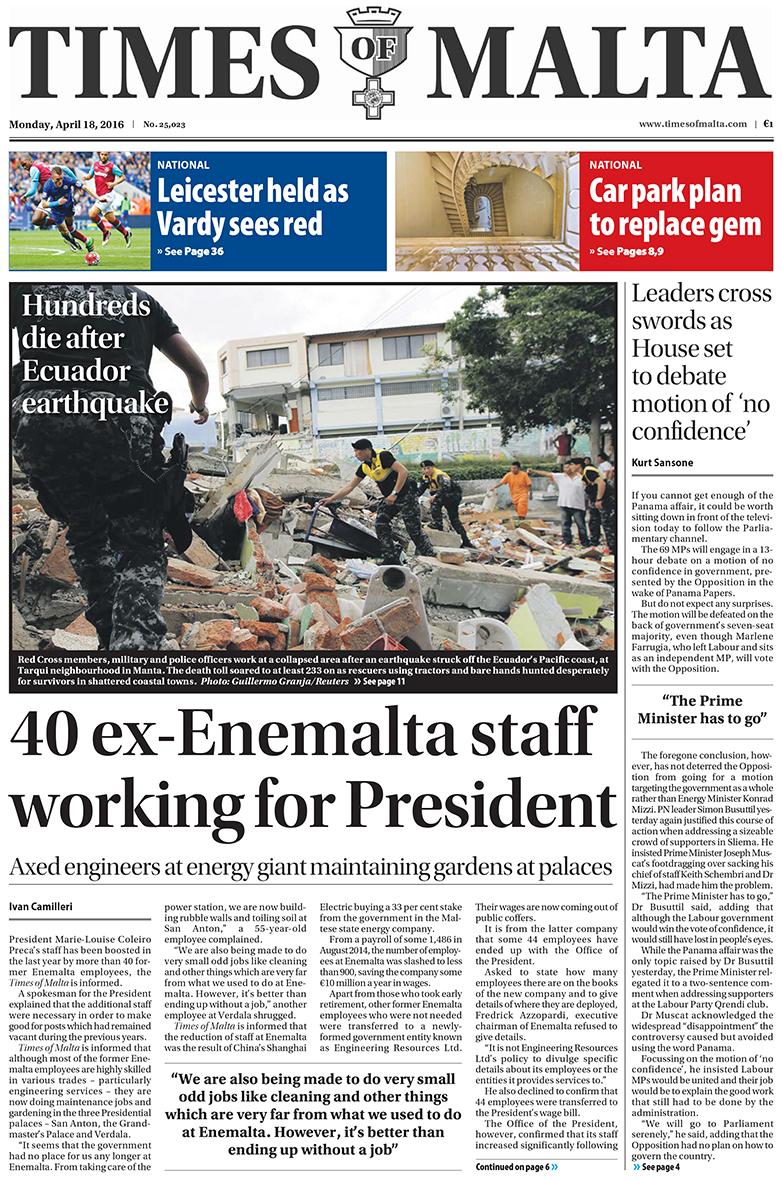 To make matters viler, around August 2014, Azzopardi introduced a scheme to offload a large portion of the Enemalta workforce. They were transferred to a newly created entity deceptively named "Engineering Resources Ltd." (ERL)— you can guess what kind of "engineering" services it actually provided. This move fraudulently shifted the financial burden directly onto the taxpayers.
It essentially functioned as a social benefit scheme: workers received a full salary for doing absolutely nothing. They would show up, clock in, and promptly disappear (jisparixxu) — a classic example of job creation the "Labour way," reminiscent of Mintoff’s old labor corps (il-Korpi: Dirgħajn il-Maltin, Baħħar u Sewwi, Iżra’ u Rabbi).
In the remote possibility that the PN opposition ever returns to government, they will undoubtedly implement some multi-million-euro scheme to compensate these ERL workers for their lost overtime and the "mental stress" of having no actual work to pass the time. It is a cycle we have seen the PL repeat time and time again, most recently right before and after the 2022 general election.
Also worth mentioning is the grid of political handouts established shortly after Labour’s landslide victory in 2013. The new administration set up a grievance tribunal at Enemalta, supposedly to address injustices incurred under the previous PN government. A colleague of mine — who later spent time confined to a hospital, where I would occasionally visit him — once told me that Enemalta had initially reserved around €1 million for this purpose.
Because of his severe obesity, this colleague had previously been excluded from joining the Delimara Power Station (DPS) firefighting team. He filed a case with the tribunal, viewing his exclusion as a political injustice. However, because the tribunal was flooded with complaints, the initial fund quickly dried up, and it looked like he would be left empty-handed.
It just so happened that Konrad Mizzi was conducting political home visits in his area at the time. When my colleague complained to him about the situation, Mizzi immediately placed a phone call to Frederick Azzopardi. Within a few days, another million euros appeared — whether from public coffers or some alternative source — to ensure practically everyone claiming a "PN injustice" got a piece of the pie. My colleague proudly told me he pocketed around €1,000, despite never performing a single firefighting duty. Meanwhile, those of us actually on the team (myself included) received only a petty allowance for our actual participation. Once again, money was handed out in a "meritocratic" fashion at the expense of those who actually did the work. But in the grand scheme of things, who cared?
An Arrest in the Midst of a Fightback: The Dark Reality of New Labour, a Shying Press, and an Inside-Protecting Ombudsman
As for my own vindictive, politically motivated transfer, I refused to take it lying down. I began collecting information to file a formal case with the Ombudsman. My dossier included the hypocritical email sent by Briffa concerning the public holiday "extra pay." My reasoning was simple: if the law didn't seem to apply to management and their favorites, it shouldn't apply to me either.
On Tuesday, March 11, 2014, I attended my usual, rather pathetic, six-month appointment at the Mater Dei Psychiatric Outpatients clinic. Once I was done, despite the pouring rain, I cycled all the way to St. Julian’s. There, I dropped off an envelope containing a CD and supporting documents at the head office of The Malta Independent. I outlined the shift-change abuse among other corporate scandals.
Evidently, the newspaper was far more concerned with securing government advertising revenue to stay afloat than doing actual investigative journalism. They never published a single word about it. To me, this was definitive proof of how fake they truly are. They are not "independent" at all; they are merely puppets on a string, strictly adhering to a dictated agenda just like the rest of the local media.
Ultimately, my efforts were cut short. Just two days later, on March 19, 2014, I was arrested in connection with the dead animal crucifixions prank in my hometown. With my laptop confiscated by the police, I was forced to abandon my whistleblower campaign for the foreseeable future.
The "Burnt Tails" Favor: How Frederick Azzopardi Avoided Paying Enemalta
Until my court sentence was handed down on June 26, 2014, I was detained in the Forensic Ward at Mount Carmel Hospital. I was kept in a cramped cell alongside four other inmates. The room was tiny — only about two and a half times the length of a single bed, and three times its width.
One of my cellmates was Richard Gauci, an Enemalta employee who had been implicated in the smart meter tampering scandal. Because they were both from Rabat and related in some way, Gauci openly admitted he was expecting Frederick Azzopardi to pull some strings for him. Gauci had been a well-known figure in Rabat; people routinely called him whenever they faced issues with Enemalta.
Years prior, Frederick had bought a townhouse in Rabat. While restoring it, he ran into an issue with his electricity meter, which he wanted moved from its original position. In Enemalta jargon, this is known as a "relocation of supply." At the time, the service carried a standard fee of €160 and usually meant waiting in a long queue for months. To bypass this, Frederick contacted his relative and friend, Gauci. Instead of going through the proper channels, Gauci logged the job under the false pretense of "burnt tails" — claiming the insulation on the wire ends at the meter was damaged or corroded. In short, instead of paying for a standard corporate service like us mere mortals, Frederick used an invented fault to shift the entire relocation cost onto Enemalta itself.
The Smart Meter Scandal: Another Angle of Corporate Corruption and Political Favors
Eventually, another inmate in our cell was replaced by Carmel Vella, yet another Enemalta employee caught up in the smart meter racket. One day, a massive argument broke out between the two. Gauci blamed Vella for getting caught. Vella had reportedly installed ten tampered meters supplied by Gauci, for which he received a two-year prison sentence and a €3,000 fine.
In contrast, according to Vella, Gauci had installed around 80 tampered meters. Yet, thanks to his extensive political contacts and friendships, Gauci walked away with just two and a half years in prison and a mere €10,000 fine, handed down by Magistrate Carol Peralta. While we were in the Forensic Ward, I overheard Gauci discussing how this €10,000 fine had been negotiated prior to sentencing as part of an early admission plea deal. The fine was a fraction of what Gauci had actually pocketed from the scam — money he boasted had allowed him to purchase a field near Buskett.
Gauci’s only real concern was what would happen once he got out of prison. He predicted that angry clients would approach him demanding refunds for the €1,000 they had paid him to install the illegal meters (not the €500 quoted in public articles). In fact, Gauci recounted a moment from his court hearing where an elderly woman testified that she was initially asked for €1,000, which was later knocked down by €100. Magistrate Peralta had reportedly joked, "So, she got a discount." Gauci's primary goal during the plea bargain was simply to keep his fine low enough to ensure he remained comfortably in the profit margin. He even claimed to have installed one of these tampered smart meters at the Rabat residence of Marlene Mizzi’s mother, who was a Labour MEP at the time.
Overqualified for Corruption, Perfect for Enemalta
Whether it was all a coincidence or not is for anyone with a brain to judge. The lawyer representing Enemalta’s interests in the case was none other than Dr. Franco Debono — the same lawyer hired by the engineer responsible for the 2010 Good Friday blackout, which Ing. Peter Grima subsequently covered up.
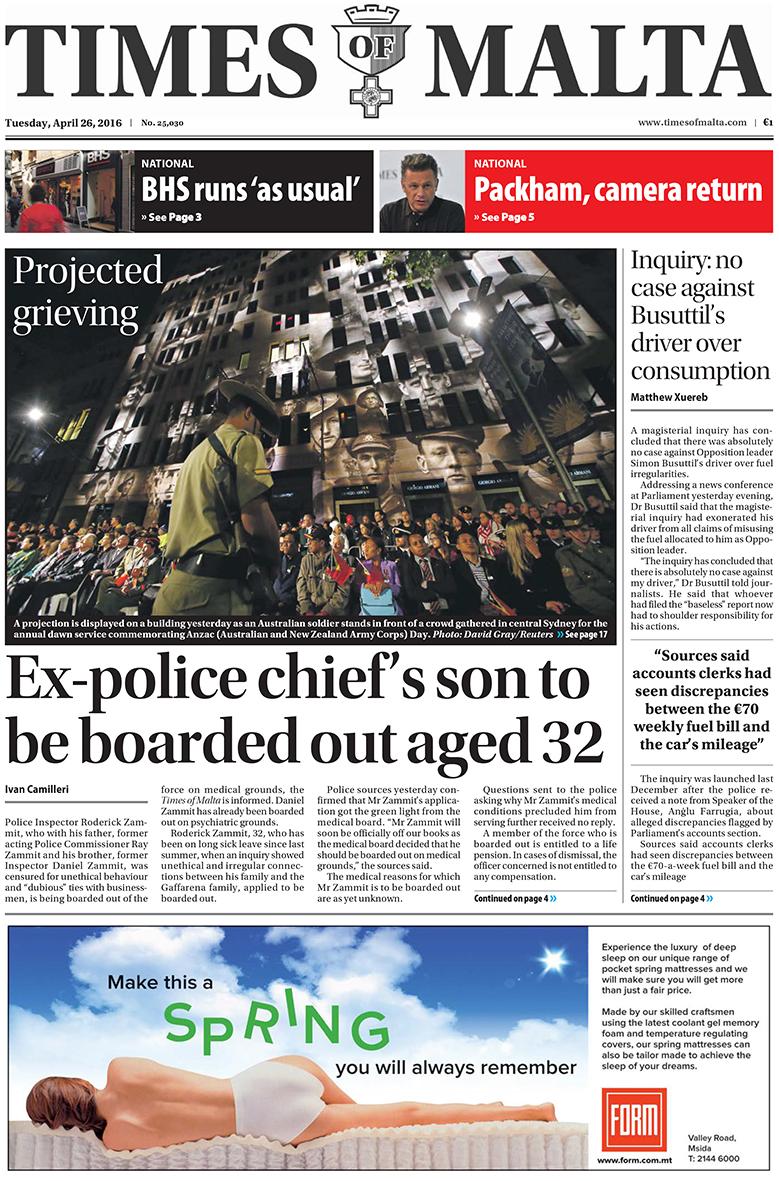 Meanwhile, the prosecuting police officers were Daniel and Roderick Zammit. These were the two sons of Raymond Zammit, the corrupt former Deputy Police Commissioner who had so blatantly framed me. Both brothers were later investigated for gross irregularities and unethical practices, before being mysteriously boarded out of the Police Force under the guise of psychiatric issues — a further testament to how fake the psychiatric establishment truly is.
Shortly after being certified as mentally unfit to serve as a police officer, Daniel Zammit was gifted a cozy job within Frederick Azzopardi’s "new" Enemalta. He was handed a staggering salary of €60,000 — the equivalent of what three or four ordinary laborers earned. It was only after the story leaked and triggered a massive public outcry that the appointment was hastily canceled. Daniel Zammit may have been too corrupt and incompetent for the police force, but those exact credentials seemingly made him overqualified for the version of Enemalta Frederick had built. Once again, Frederick Azzopardi put his twisted version of "meritocracy" into practice, turning a national corporation into little more than a political party club.
A Masterclass in Corporate Cover-Ups: How the Ombudsman Shielded Enemalta CEO
Following my court sentencing on June 26, 2014, the police finally returned the laptop they had confiscated upon my arrest. It was now August 2014, and I was highly optimistic that I would soon be discharged from Mount Carmel Hospital, as I was scheduled to appear before the Mental Health Review Tribunal. Because the six-month legal window to contest my vindictive transfer had not yet expired, I officially filed a complaint against Frederick Azzopardi with the Ombudsman.
On August 13, I emailed a copy of the draft document to myself. The finalized complaint, dated August 16, 2014, was sent by post by my sister the following day, complete with relevant extracts from the Collective Agreement. The dossier detailed, among other things, the shift-change abuse at Enemalta, as well as the older fraud committed by Frederick Azzopardi, which I had learned about from Richard Gauci. This offense should have instantly disqualified Azzopardi from holding the position of CEO — or any other role within the corporation. I also later forwarded details of that shift-change abuse to the whistleblower unit within his own office. This further jeopardized his position, as he chose to cover it up rather than investigate, desperate to protect the roles of two of the three puppets he had handpicked as managers just a few months prior.
On August 27, 2014, I received an official acknowledgment from a Maria Borg at the Office of the Ombudsman. Just a day later, on August 28, a letter arrived from Monica Borg Galea suggesting that my grievance "should be discussed" at their office before proceeding further. Suspecting no foul play, I accepted their invitation for a meeting scheduled for September 3, 2014, at 10:30 AM.
Since I was still detained in the hospital, the ward staff arranged transport and assigned a nursing aide to accompany me to Valletta. Upon arrival, the nursing aide waited at the reception desk while I headed upstairs. Waiting for me were Borg Galea and the Ombudsman himself, Judge Joseph Said Pullicino.
I foolishly assumed they had summoned me to hear a firsthand account of the allegations and to gather direction on where to look for evidence. Instead, the Ombudsman completely defied my expectations. He bluntly informed me that if I persisted with the allegations regarding Frederick's personal abuse of power and the discriminatory shift-change scam, his office would have nothing to do with it other than forwarding it to the police. Ironically, this was a step he should have taken immediately, mirroring a later case reported in an article where the ombudsman of the day had referred "the disclosure to the police for further investigation" as he saw that it "fell within the definition of improper practice."
He told me, "I give you our advice as the lawyers that we are: cut out that part and address it to the Whistleblower Officer at the Prime Minister’s Office, because that will give you the necessary protection." Naively, I followed his advice. That very same day, September 3, I sent an email resubmitting the entire complaint with the incriminating sections omitted.
Looking back, the timing of that meeting was calculated and malicious. September 3 was the exact day before the absolute six-month deadline to file a complaint regarding my March 4 transfer. By pushing the meeting to the final hour, the Ombudsman cornered me. Had he been acting in good faith, he would have forwarded my unedited allegations straight to the police. Instead, as I later realized, he deliberately engineered the meeting to coerce me into submitting a watered-down version of the document. This allowed him to cover up the abuses, discourage me from escalating the issue, and pretend he was never officially informed — which is precisely why he insisted on an in-person meeting rather than putting his "advice" in writing or via email. He was likely indebted to the new administration for allowing him to retain his role as Ombudsman and did not want to disrupt their plans. After all, the fraud I exposed would have decisively ended Frederick Azzopardi's tenure as CEO.
From Scandal to "Case Study": The Ultimate Mockery of Public Fairness
Sensing his true intentions, I decided to fight back. The very next day, September 4, I sent a follow-up email containing the revised document, re-inserting the discriminatory parts anyway. Unsurprisingly, judging by the eventual outcome of the supposed investigation, these points were completely ignored — further confirming the blatant cover-up.
In fact, the Ombudsman ultimately ruled in favor of Enemalta and Frederick Azzopardi, completely ignoring the numerous clauses of the Collective Agreement that had been flagrantly breached. To add insult to injury, they later uploaded the decision to the Ombudsman's official website as a "Case Study," shamelessly promoting it as an example of "fairness, dedication, and commitment to good public administration" (link 1, link 2)
Shielding the Guild: The Illusion of Whistleblower Protection in Malta
As for the Whistleblower Act, this was a highly publicized piece of legislation that the government had introduced only a few months prior. Believing it would offer genuine protection, I wrote to the Whistleblower Officer within the Office of the Prime Minister on October 9, 2014. I received a reply on October 21, stating that my case was being forwarded to the Whistleblower Officer under the Ministry for Energy.
Eventually, on December 2, 2014, this so-called Whistleblower Officer wrote back to me, blatantly stating that my allegations had been investigated internally by Enemalta and that no irregularities were found.
An "Investigation" Without Witnesses: The Farce of Enemalta's Self-Policing
I replied on December 21, pointing out the absolute absurdity of their conclusion. How could an internal investigation by Enemalta possibly be deemed credible when the very management involved in the abuse had been handpicked by the Chief Executive himself during his first week in office? Furthermore, why was I never called as a witness to testify in this supposed investigation? I demanded that if they were truly serious about justice, they should forward the dossier to the police for an independent investigation. I never received a reply.
What made the situation even more farcical was that Enemalta maintained its own internal whistleblower office, which reported directly to the Chief Executive — Frederick Azzopardi himself. I had actually written to this internal unit first, back on September 8, 2014 (using the email address ceowhistleblower.emc@ enemalta.com.mt). Unsurprisingly, my email was met with absolute silence.
A Fatal Mistake: How the System Protected the Corrupt and Exposed the Witness
Reporting these abuses to the whistleblower offices (b, c) while I was still confined to the hospital turned out to be a fatal mistake. I foolishly believed the law would grant me protection and help reach a fair compromise. Instead, I ended up paying a devastatingly high price. Rather than shielding me, the whistleblower infrastructure did the exact opposite: it protected the very individuals I exposed by burying the investigation, covering up their misconduct, and giving management complete liberty to exact their revenge on me.
Frederick Azzopardi's Role in Instigating Hatred Against Me and Prejudicing My Legal Standing
For Frederick, giving me a vindictive political transfer at my workplace on March 3, 2014, was apparently not enough. When I was arrested a fortnight later on March 19 regarding a prank involving animal crucifixions in my hometown of Mosta, he chose to join a frenzy of hatred and character assassination. This campaign, initiated by the Police, intentionally framed me with animal cruelty and other macabre accusations.
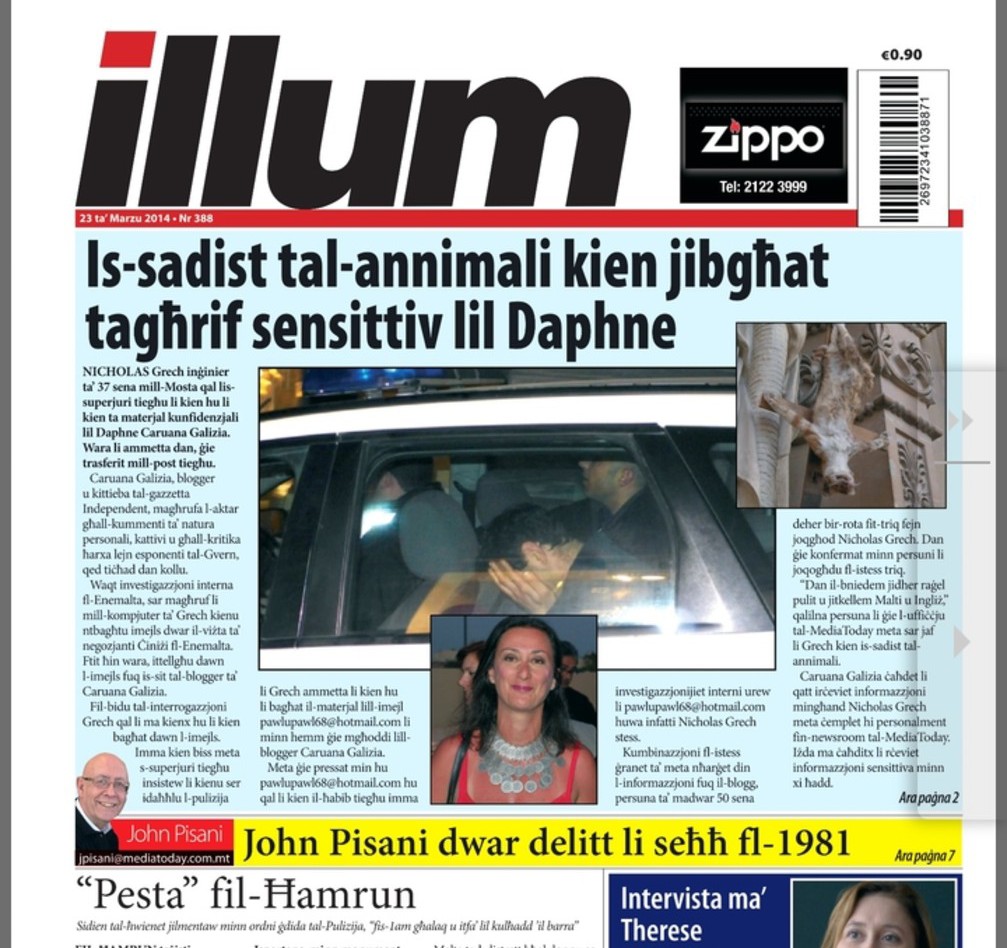 Frederick went so far as to leak details of my transfer to MaltaToday, and even orchestrated an article in its Sunday sister newspaper, Illum, on June 23. The piece highlighted the transfer I had been given at Enemalta — the very entity he presided over — and claimed the move was triggered by an email he alleged I had sent to blogger Daphne Caruana Galizia.
The headline of that article described me as a "sadist." Yet, I am left wondering what was truly meant to make me look worse: the false label of animal cruelty (which was later proven untrue, as the animals were already dead when I found them on the road), or the implication that I had fed sensitive information to a blogger so deeply hated by PL activists.
This front-page article concluded with even more falsehoods, claiming that a "polite person with a bike" had spoken to my neighbours and had even contacted the MaltaToday premises - the shameless extension of Malta’s Labour Party propaganda machine. This is a detail that clearly points to Frederick’s direct involvement in shaping the story, despite him trying his best — with the lies he is so good at — to hide the fact that he was behind it.
Published just three days after my arraignment, this article falsely labeling me with animal cruelty is further definitive proof of the trial by media I endured, which ultimately denied me a fair trial. It further demonstrates that my workplace transfer was entirely politically motivated. Frederick simply could not resist the opportunity to later weaponize my court case as well, pushing for further public hatred against me and intentionally heavily prejudicing my legal standing.
How Politics, Media, and Corruption Locked Me Away
After Magistrate Carol Peralta vindictively railroaded me to Mount Carmel Hospital in June 2014 — a move of pure, premeditated revenge — I wasted no time. Within weeks, I wrote to the then Justice Minister, Owen Bonnici, exposing the glaring anomalies in my case, the vile police frame-up, and the rigged trial fueled by orchestrated public hatred. Yet, he didn't bother to investigate a thing. In light of this, I demanded that he not drag his feet in allowing my case to be reviewed by the responsible Tribunal, which was tasked with deciding on my release and my fate. In a rare instance of wasting no time, Minister Bonnici subsequently referred me to the Tribunal, where I appeared on 6-Oct-14 before a panel presided over by retired Magistrate Joseph Apap Bologna.
Minister Bonnici must have been appalled that the law, as it stood, placed the entire burden on me — a miserable patient — to write directly to the Minister just to be referred to the Tribunal. In fact, by October 2014, he had the law amended: he dismantled the Tribunal and established a Commissioner for Mental Health. The new system left it to the Consultant Psychiatrist to write on behalf of the patient to be referred to a newly established Committee, presided over by the Commissioner, which was responsible for hearing cases like mine. Magistrate Apap Bologna himself passed away on 19-Oct-14, less than two weeks after my hearing. He was perhaps shocked to death by his own insatiable greed, knowing his services were no longer needed and his extra commissions were gone.
Right around then, Daphne Caruana Galizia dropped a bombshell article exposing Bonnici’s private life, revealing he had abandoned his wife for a Super One journalist. The timing was lethal. Months prior, Enemalta CEO Frederick Azzopardi had already been desperately painting me as Daphne’s ally, calculating that the fierce hatred Labour loyalists harbored for her would naturally transfer to me. To show off, Bonnici must have leaked my private correspondence to The Malta Independent. In March 2015, the paper ran a targeted piece detailing my plea for release, intentionally concluding with a narrative of hatred calculated to box the Minister in and ensure my release would never happen. It was through this article that I learned the Tribunal had rejected my plea for release — let alone a few hours of leave from the hospital — having been kept completely in the dark and left to wait in vain for an outcome.
Railroaded by Revenge
That article undoubtedly hit Azzopardi’s radar immediately. Realizing the Minister was now involved in my potential release — and desperate to prevent it at all costs — he intensified his revenge, knowing exactly what explosive information I held. I had already reported Azzopardi's corruption to the Ombudsman, unmasked insider whistleblower operations (a, b, c), and flagged the blatant irregularities of the crony managers he handpicked during his first weeks as CEO. Armed with pure desperation, Azzopardi must have further poisoned the Minister’s mind against me, infuriating Bonnici enough to ensure that my release, or any possible leave from the hospital, remained completely dead in the water.
The Weaponization of the Mental Health Law
So much so that after my consultant psychiatrist, David Cassar, finally wrote to the Minister by April 2016 to have me reviewed by the Committee — following months of excuses that he still needed to familiarize himself with the new procedures required by the new mental health law — Minister Bonnici simply dragged his feet, intentionally doing nothing. Whenever I inquired with the Ministry, they cut me short with excuses that he was waiting for direction from the Commissioner of Police, and would later claim he was also seeking the advice of the Attorney General. Vilely, he did this one at a time, even though neither entity had anything to do with my situation, considering my case was not a criminal one; rather, it was one in which I had been fraudulently labeled as mentally ill.
Despite my having made Minister Bonnici aware of this in writing, he simply ignored me. It took a visit from my relatives to his district office to clarify the matter further. Playing dumb as though he were unaware of the situation, he finally wrote to the Committee to have me reviewed for the possibility of some leave from the hospital.
Guilt by Association: The Daphne Factor
Frederick had been so deeply involved in infuriating the Minister against me that Bonnici must have felt indebted to inform him of this step. Azzopardi, true to form, immediately ran to his usual contacts at MaltaToday. Just days before I was finally due to be reviewed by the Committee, the newspaper fueled further hatred against me. They published a Facebook post on their page once again associating me with Daphne Caruana Galizia, claiming I used to correspond with her using the specific email address that their sister newspaper, Illum, had exposed following my arraignment in court some two years prior.
In fact, even after I appeared before the Committee and they recommended to the Minister that I be given a few hours of leave, Minister Bonnici vindictively refused to proceed. In August 2016, I reported Minister Bonnici’s vindictive actions to the then Prime Minister, Joseph Muscat, only to be met with the same old reply when I contacted the Ministry: that the Minister had once again requested advice from both the Commissioner of Police and the Attorney General regarding my case.
The Ombudsman’s Complicity and the Backdated Letter
Left with no choice, I tried my luck by reporting, among others, Minister Bonnici to the then Ombudsman, Anthony Mifsud, on March 20, 2017, citing the vindictive way he was intentionally prolonging matters and denying me the few hours of leave recommended by the Committee. I provided his office with additional details over the following weeks (a: 29-Mar-17, b: 26-Apr-17) and followed up again in July 2017, but received only a standard acknowledgment.
Protecting the Minister, not the patient
In May 2017, I contacted John Cachia — who, as Commissioner for Mental Health, had presided over the Committee — asking for the conclusions they had reached regarding my case. He cut me short, deflecting the responsibility by telling me to ask Minister Bonnici instead, claiming it was the Minister who had initiated the review.
This was another door shut in my face by someone duty-bound to protect patients. Instead of acting as a shield for the vulnerable, Cachia chose to protect the establishment. He failed to see the glaring irony: as Commissioner, he should have been demanding to know why the Minister had spent so long burying the Committee's own recommendations regarding my status.
October 2017: How Minister Owen Bonnici Scrambled to Hide His Tracks in the Wake of Daphne's Assassination Amid the Subsequent International Outrage
Around August 2017, two members of the Legion of Mary who regularly visited hospital patients went to inquire with the Minister about my case. The Minister unashamedly told them that it was "not worth helping him because he writes to Daphne and to the Ombudsman." This explicitly exposed not only his blatant political discrimination against me, but also the fact that my decision to report him to the Ombudsman had fueled his animosity even further. Around the same time, two opposition politicians from my hometown of Mosta spoke privately with the Minister in Parliament about my case, only to be met with the exact same reply. They could have easily sought a political advantage by exploiting the Minister's blatant discrimination to demand his resignation. Yet, the sheer volume of unfounded hatred that had been instigated against me over the years must have forced them to shy away from being seen as trying to help or speak up for me.
In the meantime, blogger Daphne Caruana Galizia was assassinated weeks later by a car bomb on October 16, 2017 — which, by sheer coincidence, happened to be the sixth anniversary of when I had started my animal crucifixion pranks. A few days later, I wrote to the Ombudsman once again regarding the Minister's abuses. This time, completely unexpected, they bypassed the standard acknowledgment and hurriedly replied that very same day. They claimed they had been informed verbally by the Ministry that Bonnici had finally approved a few hours of leave for me, as recommended by the Committee, and stated they would contact me later with further developments.
I shot back, demanding to know if they intended to hold the Minister accountable for his abuses, given that he had willfully stalled my case for two and a half years. They never followed up, offering further proof of their collusion to shield him from scrutiny. Subsequently, on January 30, 2018, the Ombudsman's office issued an email reply, callously stating that the case against Minister Bonnici (R007) was concluded, without offering a single word of condemnation for his vindictive actions against me.
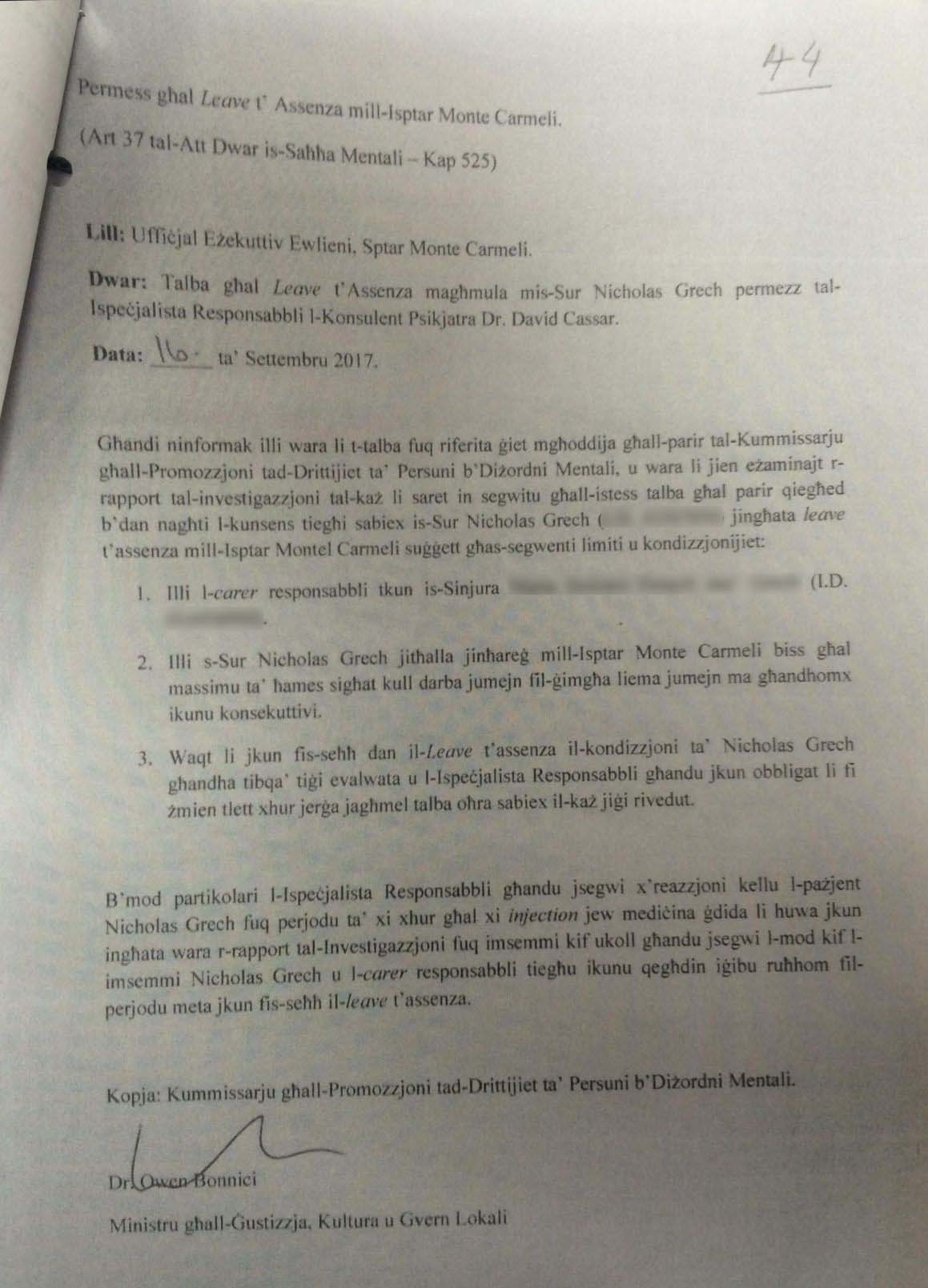
The official letter from Minister Bonnici approving my few hours of leave WAS INTENTIONALLY BACKDATED TO SEPTEMBER 16, 2017 — exactly one month before Daphne's assassination. Rest assured, this approval actually happened later. In fact, when I last wrote to the Ombudsman, they were caught completely off guard, which is why they could only state that the supposed approval had been given verbally. The immense local and international outrage over Daphne's assassination must have terrified Minister Bonnici. Fully aware that his previous comments to those four people had exposed his discrimination against me based on my alleged association with her — remarks he would never have dared to make in the tense aftermath of the assassination — he knew his reputation and career were on the line. The backdating of the approval letter WAS A DESPERATE COVER-UP to make it appear as though his decision was entirely unrelated to the assassination. This parallels a situation where a marginalized individual — such as someone targeted for their sexual orientation or race — experiences prolonged harassment that suddenly ceases just prior to the assassination of a member of their community. Clearly, such a sudden halt is driven entirely by the ensuing public outrage — hence the Minister's backdated letter.
His internal discrimination, driven by pure hatred and prejudice, was so thorough that in the letter, he explicitly mentioned the injection I was ordered to receive according to the Committee's recommendations. Ironically, this was a mandate I had already been subjected to for two and a half years, immediately following my review by the Committee. It is a cruel irony how quickly they enforced a harmful mandate involving an injection with frightening side effects, while intentionally withholding a beneficial recommendation like a few hours of leave — a deprivation that could only lead to the deterioration of the very mental condition they had falsely fabricated in the first place.
Confronting the Psychiatrist: Reporting David Cassar to the Ombudsman
When I reported Minister Bonnici to the Ombudsman in March 2017, I also requested an investigation into the abuses committed by Psychiatrist David Cassar himself. Despite my repeatedly making him aware that I had misled them — which led them to an entirely wrong conclusion in their court reports — Cassar chose not to have the case reopened or to have me re-reviewed. Instead, he kept me locked up and heavily medicated simply to save face.
This time, the Ombudsman's office did not hide behind the usual excuse: "I give you our advice as the lawyers that we are ..." — the phrase they used when I previously reported the systemic corruption at Enemalta and Frederick Azzopardi. Instead, he simply suggested I forward the matter to the Medical Council, which I later did.
The Medical Council: A Blatant Conflict of Interest
Predictably, the Medical Council turned out to be just another flawed, compromised authority. In a staggering conflict of interest, one of its sitting members was img Doreen Cassar — the wife of the very psychiatrist I was reporting. The other board members were completely unprofessional; they failed to even acknowledge this blatant conflict of interest, let alone force her to recuse herself from the hearing. They clearly shied away from taking action or investigating him simply to avoid embarrassing a colleague and ruining their relationship with her.
Psychiatrist David Cassar retaliated against me immediately. First, he stopped showing up to see me during ward rounds for a long period. Then, once the Minister was unexpectedly forced to finally approve my leave, Cassar began dragging his feet to stall the process — well aware he risked much for the abuses I had reported, and that the way My I had managed to mislead them had exposed him and his profession as one complete fraud. It takes immense psychological strength to survive with your sanity intact when a sadistic Minister, a compromised psychiatrist, and a vindictive official like Frederick Azzopardi actively conspire to destroy you. Together, they have done everything in their power to make life as miserable as possible for me, an innocently framed, institutionalized patient.
In fact, not only did I have to write to the Medical Council again on January 15, 2018, holding them responsible for Cassar's retaliation, but it had also required the intervention of one of the two politicians I mentioned earlier weeks before. He had already directly questioned Cassar and the Commissioner for Mental Health, Cachia, as to why I was still being denied leave, which finally forced Cassar to back down. Exposed in his deliberate retaliation, he relented and allowed my long-awaited, short-duration leave to begin later that month (January, 2018). However, this was not before he had unsuccessfully tried his best to incapacitate me, having started the process months earlier to prescribe me another dreadful injection — Olanzapine — which, possibly owing to its high cost, ended up not getting approval. Consequently, he had to prescribe it to me in pill form at a lower dosage instead.
August 2018: More Bureaucratic Stalling and Legal Threats from the Minister
This leave was meant to be reviewed and increased after three months. Instead, Cassar dragged out the situation until August 2018 before finally requesting an extension from the Minister — ignoring my desperate pleas for months.
He was clearly retaliating. I had already reported him to the Medical Council and the Ombudsman, but by late April 2018, I had also launched this website detailing my ordeal. When I informed Charles Messina, the Commissioner for Health within the Ombudsman’s office, about it, he didn't investigate the widespread abuses in the mental health sector. Instead, he rushed to alert Cassar, giving the psychiatrist even more reason to despise me. True to form, Minister Bonnici, for his part, vindictively ignored the plea yet again and did nothing.
When the two members from the Legion of Mary contacted the Ministry on my behalf, they were once again met with the standard excuse: that the Minister was awaiting advice from "experts" — namely, the Commissioner of Police and the Attorney General. It was a calculated stall tactic designed to continue freezing my case indefinitely — further proof that his previous approval for my leave was merely a panicked reaction to Daphne’s assassination, a move he otherwise would never have dared to make.
Around November 2018, those same two individuals went to speak with the Minister in person. He cut them short, claiming he would request my file to see where things stood. Weeks passed with zero progress. When one of them sent an email reminder to Minister Bonnici, the Minister weaponized his position, threatening them with court prosecution by replying:
“...
Allow me to remind you that what your friend is requesting is not an automatic right, but rather a request for a derogation from a court decision.
I was kind enough to grant you a meeting. Contrary to what you wrote, I did not assure you that I would sort everything out, but instead told you that I intend to look favorably upon the request in question, subject, however, to seeing what advice the experts give me.
I believe further pressure is unwarranted, and if undue pressure continues to be applied, I will have no other option but to refer the matter to the court and request that it take all measures it deems appropriate against whoever is exerting this undue pressure.
I am warning you to act mindfully.”
It was a thinly veiled threat detailing the retaliatory measures he had ready.
February 2019: Escalating the Case to the Standards Commissioner
Around January 2018, the government established the new role of Commissioner for Standards in Public Life, with George Hyzler appointed to the position. I decided to report Minister Bonnici to him in an email dated February 14, 2019. In it, I made him aware that I had witnesses — initially stating three, though there were actually four — to whom the Minister had explicitly bluffed that my alleged correspondence with Daphne was a reason why it was "not worth helping" me.
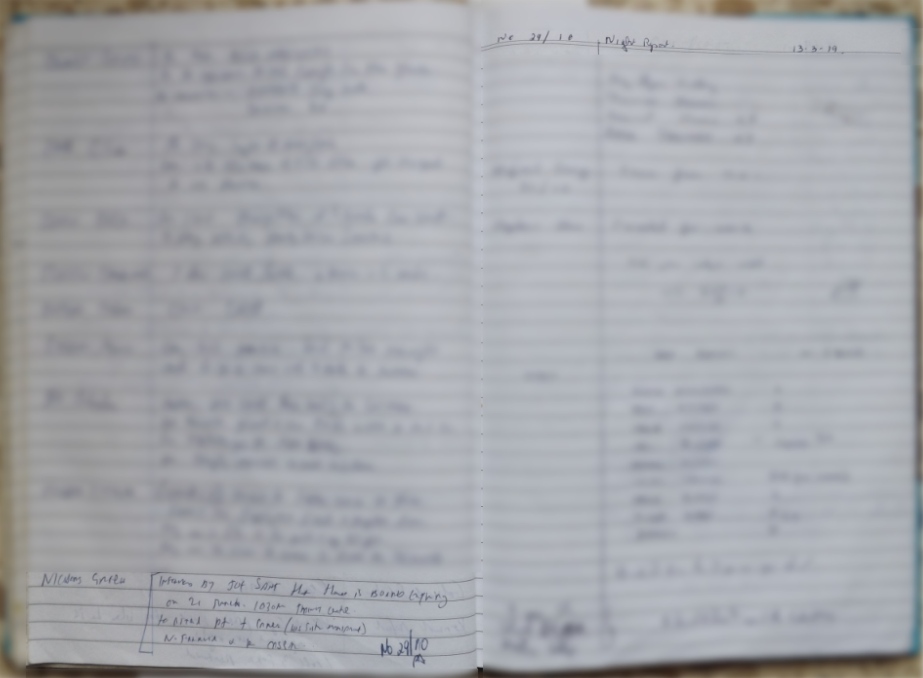
Minister Bonnici’s internal discrimination against me was undeniable. Just a few weeks after I filed that report, the nursing staff unexpectedly informed me of a sudden breakthrough. The shift in my situation was documented clearly in their nursing report: “Nicholas Grech – Informed by Joe Sant there is Board Enquiry on 21 March [2019] 10:30am, Training Centre. To attend patient and carer (his sister???), N. Farrugia and Dr. Cassar)." Less than a month after I appeared before the Committee on that date, the approval for my leave increase was finally issued by Minister Bonnici.
Since I had also been corresponding on this matter with Charles Messina, the Commissioner for Health within the Ombudsman’s Office, he promptly notified me of the development. He attempted to take credit for it — a claim I immediately countered by stating that the resolution was instead triggered by my report against Minister Bonnici to the Commissioner for Standards, George Hyzler.
I had also written back to the Commissioner for Standards in April 2019, asking if he now intended to simply ignore the Minister’s long history of calculated, vindictive delays, yet I was met with deafening silence. It became clear that the Commissioner felt indebted to the government that had rewarded him with his prestigious role, choosing to shield the Minister rather than hold him accountable.
Sweeping the Crimes Under the Carpet: The Verdict of a Corrupt System
Ultimately, on September 6, 2019, the Commissioner concluded my case by stating that my allegations "have been categorically denied by the Minister" and that he "was disposed to accept the Minister's version."
Because I was heavily occupied writing about other matters on my website, I waited until February 2020 to send my formal reply. I told him bluntly: "I can confirm to you black on white via two emails in PDF form that... this Minister has categorically lied against the testimony I have from four independent persons." In fact, the events had further unfolded to prove this: the Minister suddenly changed his attitude and approved the increase in leave only after I reported him and exposed his abusive acts to this same Commissioner. This turnaround further confirmed his animosity toward me, proving once more he had intentionally stalled my case again out of spite for my association with blogger Daphne. True to form, he refused to reply, investigate, or take any action whatsoever. Behind closed doors, it must have been none other than the Commissioner himself who alerted the Minister that I could escalate the matter further with the four witnesses I had.
That is life in corrupt Malta: the authorities systematically cover up the abuses of the "big heads," while the ordinary citizen and the man in the street are left to burn. It is exactly as if you were violently robbed of something valuable for years, only for the Commissioner to casually tell the thief to give the item back, expecting everything to revert to normal. No accountability, no justice — just political crimes swept cleanly under the carpet.
The Reward Structure of Accountability
Instead of facing consequences, the figures who facilitated or ignored this administrative hostility were systematically rewarded with prestigious advancements:
1. Frederick Azzopardi
Utterly corrupt, ruthlessly vindictive: Frederick AzzopardiFollowing his 2022 departure from public office, the former Infrastructure Malta CEO transitioned seamlessly into the private sector as CEO of JCL Holdings, a giant in food manufacturing. By August 2024, the revolving door of state patronage spun completely: JCL was smoothly handed the lucrative catering contract for Mount Carmel Hospital. The hospital's CEO, Roseanne Camilleri, seemingly earned her stripes by facilitating this deal alongside hosting a small army of phantom-job security guards and similar idle staff — marking a cynical evolution for JF Services as it shifts from trafficking and exploiting TCNs in the private sector to burdening taxpayers with them as public sector employees who spend their shifts sleeping and playing on their phones. By April 2026, while comfortably retaining her CEO position, she was additionally rewarded with a cushy appointment as Malta’s ambassador to Liechtenstein — a role so purely symbolic that, had she been sent to Ħal Kirkop instead, her diplomatic schedule might actually require some effort.
2. Owen Bonnici
Equally corrupt, ruthlessly vindictive: Minister Owen BonniciDuring his tenure as Minister of Justice, Bonnici openly demonstrated his profound contempt for the assassinated journalist Daphne Caruana Galizia, targeting anyone associated with her. He spearheaded the continuous state-sponsored suppression of her memory by repeatedly deploying Cleansing Department workers to tear down the makeshift memorial at the Great Siege Monument in Valletta. Yet, in a staggering display of political irony, he was appointed in July 2021 as the Minister responsible for civil rights, equality, and reforms.
3. Standards Commissioner George Hyzler
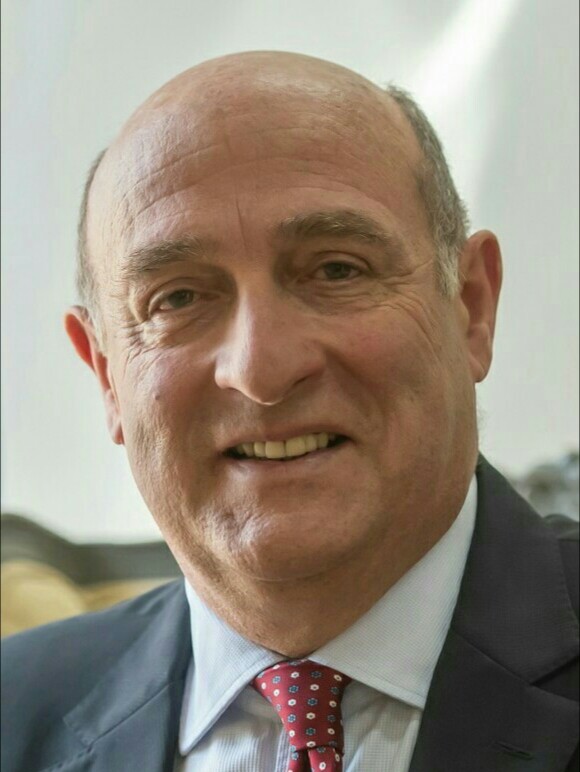 George Hyzler, the former Standards Commissioner whose decision not to pursue investigations into Minister Owen Bonnici shielded the minister from political fallout.
For his part in maintaining a passive stance, the former Commissioner for Standards in Public Life was comfortably transitioned out of domestic scrutiny. In October 2022, he was appointed to a highly prestigious, six-year term as Malta’s representative at the European Court of Auditors (ECA) in Luxembourg. I had previously, in April 2022, alerted the European Court of Auditors to his shortcomings and mishandling of my case, but was curtly informed that the "ECA’s mandate and powers do not allow it to interfere with the procedure of nomination or appointment of the ECA Members." Nevertheless, his upward trajectory continued within the EU institution, where he was subsequently elected Dean of Chamber II, overseeing audits on investment for cohesion, growth, and inclusion.
4. The Daphne Caruana Galizia Foundation
 The Daphne Caruana Galizia Foundation: Falling Short of Her Legacy
If it was no coincidence that Minister Owen Bonnici hurriedly approved my leave in a backdated letter on September 16, 2017 — exactly 30 days before Daphne Caruana Galizia’s assassination on October 16, 2017 (a date marking the sixth anniversary of when I began the animal crucifixion prank in 2011) — in a desperate attempt to cover his tracks and conceal his discrimination against me over my alleged association with her, especially after bluffing to four people that this made me not worth helping (a, b), then what happened even before was equally striking. I had written to Daphne herself on December 20, 2016 — exactly 300 days before her death — highlighting the ordeal Minister Bonnici was putting me through due to that alleged association. She initially asked for my permission to publish our correspondence but later must have changed her mind, likely realizing the intense, unfounded hatred directed from different fronts at both of us would only cause us further damage.
By late April 2018, approximately six months after her tragic assassination, I launched this website; meanwhile, her family had established The Daphne Caruana Galizia Foundation. In November 2020, I forwarded this past correspondence I had with Daphne to the Foundation, along with links to this website, detailing the discriminatory and vindictive actions of Minister Bonnici and his associate, Frederick Azzopardi. I reached out again in August 2021 after being mentioned in the media. In both instances, they failed to hold Bonnici and Azzopardi accountable. So ultimately, how can we blame the Commissioner for Standards in Public Life, George Hyzler — who later merely shielded the Minister from political fallout — when Daphne's own immediate family refused to take action themselves, leaving Minister Bonnici free reign to repeatedly clear her makeshift memorial in Valletta, among other things?
Ironically, this Foundation serves as the local contact for Transparency International, an entity meant to expose and report Maltese corruption globally. Yet, when I wrote to them again in January 2024 and April 2026 with extensive evidence of the systemic corruption and injustices I continue to endure, as further outlined on my website, the result was the same: total inaction and a deafening silence.